This website uses cookies to display external content and to collect anonymous statistics on usage behavior.
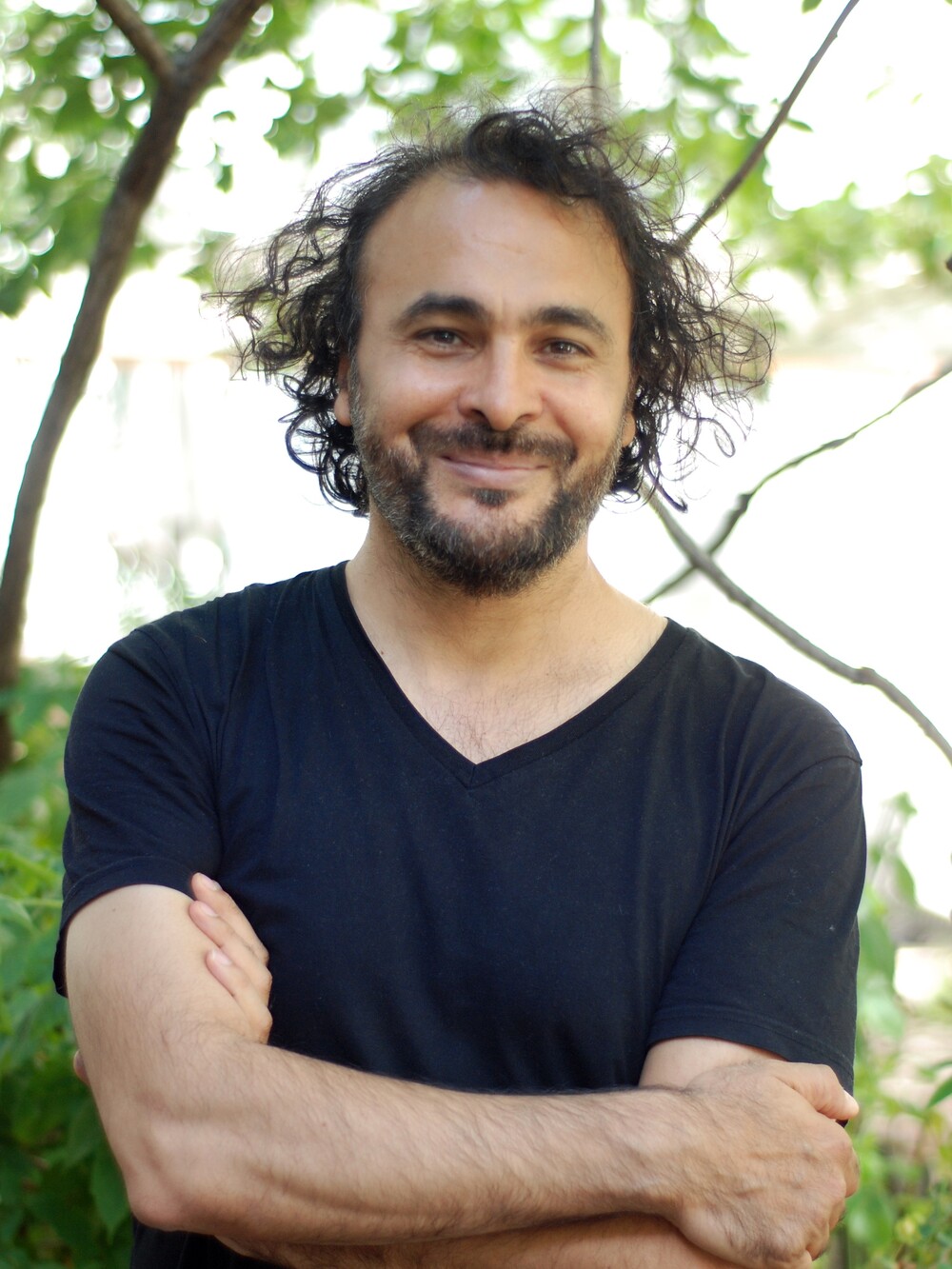
Kader Attia (*1970) was born in the Parisian district of Dugny, he was raised in suburban Paris and in Algeria. He graduated from École Supérieure des Artes Appliqués Duperré in 1993 and École Nationale Supéreure des Arts Décoratifs in 1998.
Kader Attia’s working method combines intensive research with artistic strategies that critically examine colonialism, migration, identity, religion, and Western modernity. He is particularly interested in the experience of exclusion, humiliation, and injury—whether physical, psychological, or cultural—and uses this to develop artistic concepts that deal with the idea of “repair.” In doing so, he contrasts Western ideas that aim to restore an original state with traditional approaches that leave traces of injury visible. His works range from installations with masks, mirrors, and display cases to photo projects and video works in which he gives a voice to anthropologists, psychoanalysts, healers, and/or those affected. With poetic images and historical depth, he creates spaces in which repressed histories, colonial traumas, and alternative forms of knowledge become visible—always with the aim of questioning social narratives and opening up new forms of collective healing and remembrance.
His solo exhibitions have been staged in museums and galleries across the world, including MAMBO, Bogotá (2024/25); MUAC, Mexico (2025); Hayward Gallery, London (2019); The Power Plant, Toronto (2018); SMAK: Stedelijk Museum voor Actuele Kunst, Ghent (2017); Museum für Moderne Kunst, Frankfurt am Main (2016); Beirut Art Center (2014) or Whitechapel Gallery, London (2013). He participated in many international art biennials, notably 36th Bienal de Sao Paulo (2025); Manifesta 12, Palermo (2018); Sharjah Biennale (2017); 57th Venice Biennale (2017) and documenta 13, Kassel (2012). In 2022 he curated the 12. Berlin Biennale. From 2016 until 2020 he was running La Colonie (together with Zico Selloum), a bar and meeting space intended for exhibition, activism and debate in Paris.
Since 2023, he has been Professor of Time-based Media at the HFBK Hamburg.